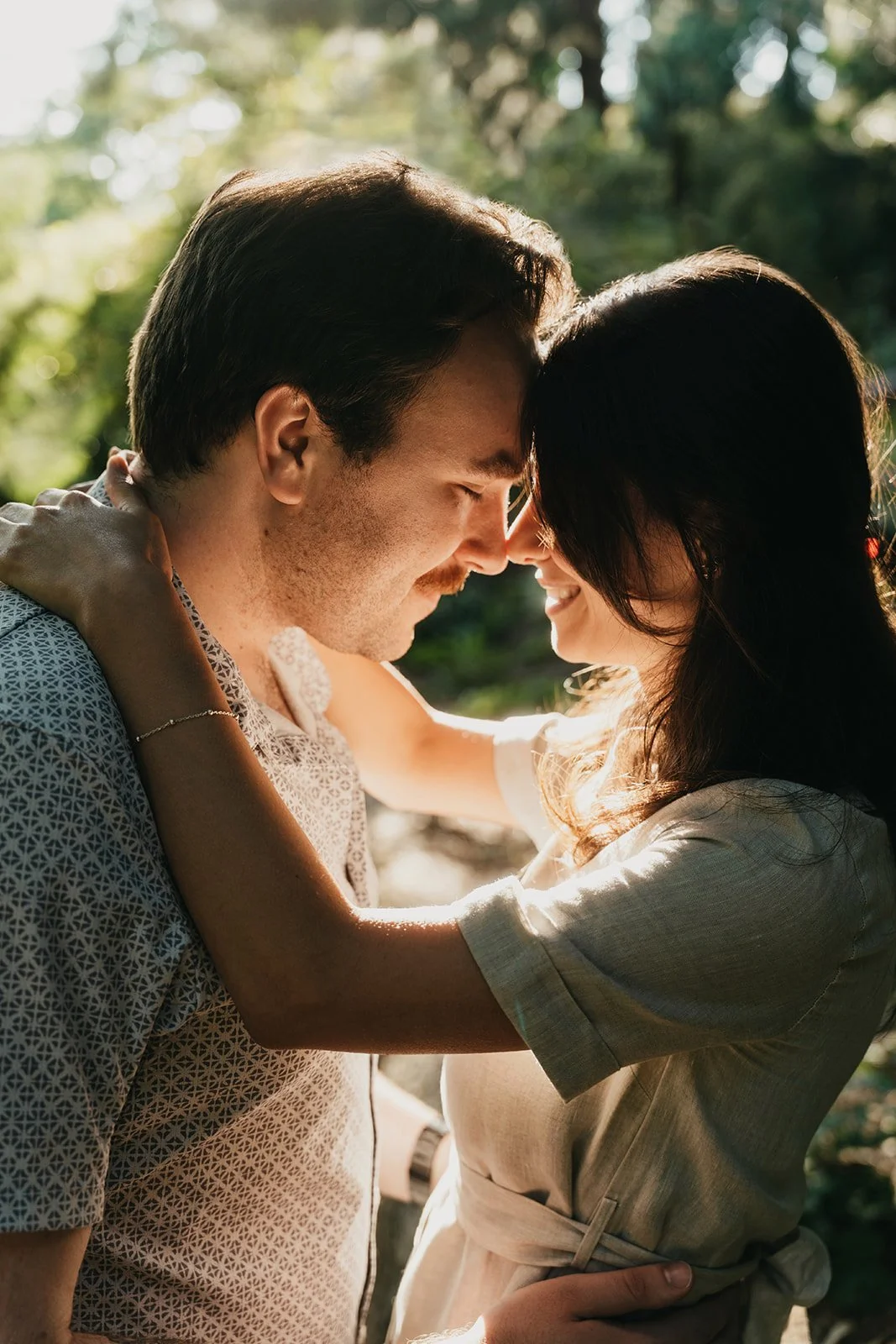
A Cozy Guide to Relaxed Couples Sessions
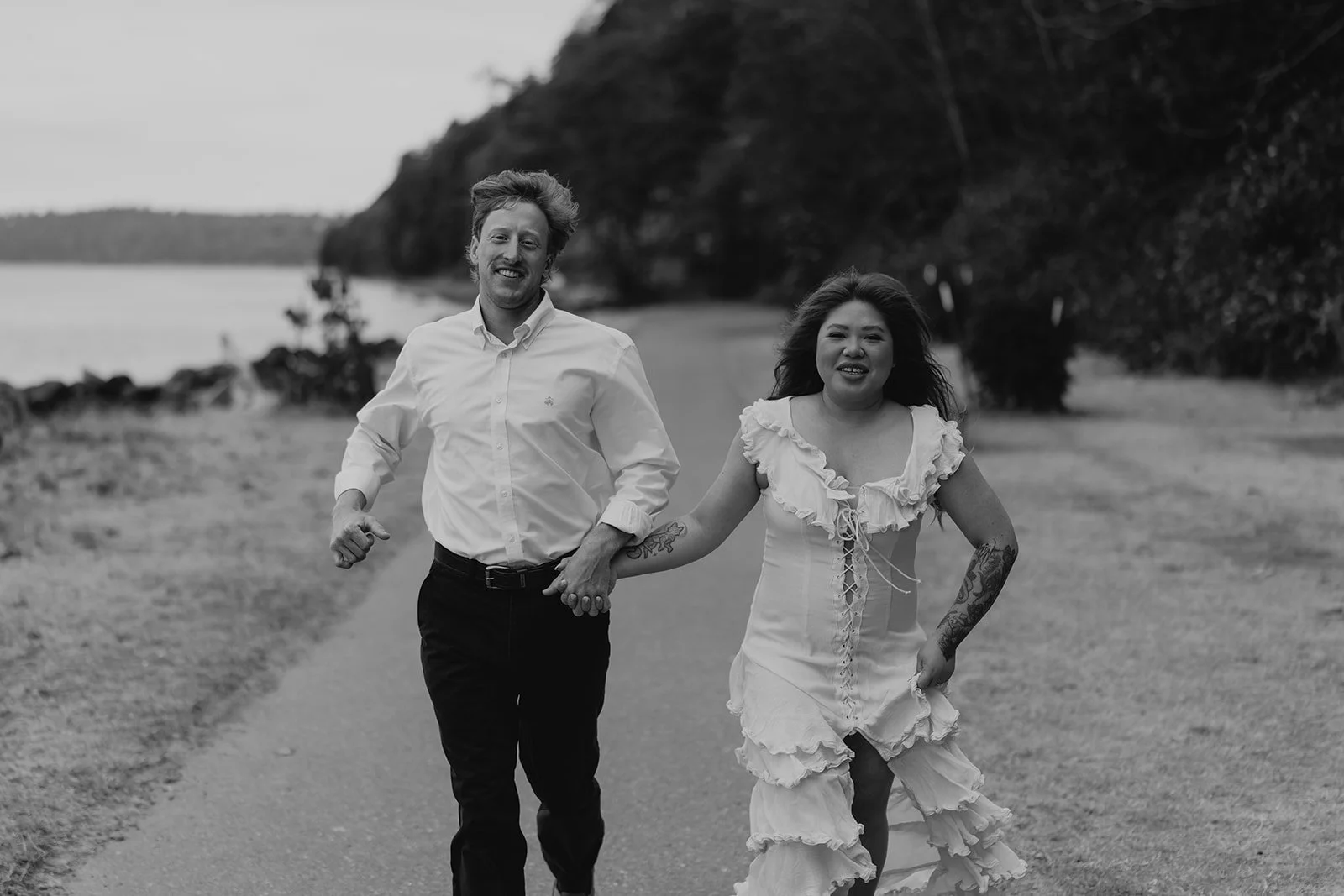
You do not need to arrive at a couples session knowing what to do with your hands, how to stand, or how to make a normal Tuesday-night laugh happen on command. A guide to relaxed couples sessions should start there: the best photos are not proof that you two can model. They are little, honest records of the way you look at each other, tease each other, hold on a little longer, and feel at home together.
Maybe you are celebrating an engagement. Maybe your wedding is coming up and you want to shake off camera nerves before the big day. Maybe there is no milestone at all, except that you love this person and would really like to remember this version of your life. All excellent reasons to make photos. Cookies afterward are also an excellent reason, just saying.
What “relaxed” actually looks like
Relaxed does not mean a photographer leaves you alone in a field and hopes for the best. Most people feel more comfortable with some direction, especially during the first ten minutes. The goal is gentle guidance that gives you something to do while leaving room for your real personalities to show up.
You might be asked to walk slowly, pull each other close, look at your partner instead of the camera, or tell them what you were thinking the first time you met. None of that requires a performance. It simply gives your attention somewhere more meaningful to go than, “Am I standing weird?”
The session will likely move between lightly posed portraits and candid moments. A photographer may place you in flattering light, adjust a hand or shoulder, then prompt you to interact. That mix matters. A fully posed photo can be gorgeous, but the in-between grin after you bump hips or the way one of you instinctively reaches for the other often carries the feeling you will come back to years later.
How to prepare for a relaxed couples session
The easiest preparation is less about getting everything perfect and more about removing little distractions ahead of time. Wear something that feels like an elevated version of you. If you never wear bodycon dresses, a super-formal suit, or shoes you cannot walk in, your session is probably not the day to begin. You want to be able to move, sit, lean in, and wrap your arms around each other without thinking about whether your outfit is cooperating.
Choose clothes that work together rather than matching exactly. Soft neutrals, earth tones, jewel tones, and simple textures tend to photograph beautifully in the Pacific Northwest. A flowy dress, favorite jeans, a great jacket, or a sweater you genuinely love can all work. Avoid tiny high-contrast patterns or logos that pull attention away from your faces, but do not stress yourself into a beige-only wardrobe if color is part of your personality.
It also helps to make a tiny plan for the hour before your session. Eat something. Give yourself extra time for traffic and parking. Put on music while you get ready. If one of you is nervous, name it without making it a big dramatic thing. “I am going to need a minute to warm up” is incredibly normal, and a good photographer will meet you there.
Bring one meaningful detail, if it feels right
You do not need props, but one personal detail can make a session feel especially yours. That could be the blanket from your first apartment, a bottle of champagne to pop at the end, your dog, a bouquet from the farmers market, or takeout coffee from your usual Saturday stop.
The trade-off is timing. Pets and champagne bring wonderful energy, but they can also take a few extra minutes to manage. If bringing your pup will make the photos feel incomplete without them, absolutely bring the pup. If you mostly feel obligated because they are adorable, consider giving them a cameo at the beginning and arranging for a friend to take them home afterward.
Pick a location with room to be yourselves
Seattle and the surrounding area offer plenty of beautiful choices, from a misty park and waterfront path to a cozy neighborhood with good coffee and brick buildings. The prettiest location is not always the best location, though. Think about what kind of setting helps you feel like yourselves.
If you are happiest outside, choose a place where you can walk, move, and have a little privacy. If rain makes you want to curl up indoors, an in-home session or a favorite café area may fit your story better. If your relationship includes weekend ferry rides, bookstore browsing, mountain air, or wandering through your own neighborhood, those details are more valuable than chasing a location you saw in someone else’s photos.
A busy spot can be fun and energetic, but it may not be ideal if you are both camera-shy. A quieter location gives you space to loosen up. On the other hand, a city setting can be perfect for couples who feel awkward staring into each other’s eyes in an empty field. It depends on where you naturally settle into conversation.
And yes, Washington weather gets a vote. Overcast skies can be beautifully soft and flattering, so a cloudy day is not a photography emergency. A light drizzle may even add a little romance if you are open to it. For a true downpour, a backup plan is smart. Flexibility is much more useful than spending the week before refreshing three weather apps every eight minutes.
Let the first few minutes be a little awkward
Here is a secret from behind the camera: nearly everyone needs a warm-up period. Even couples who are wildly in love and very good at taking selfies can feel suddenly unsure when someone points a professional camera their way.
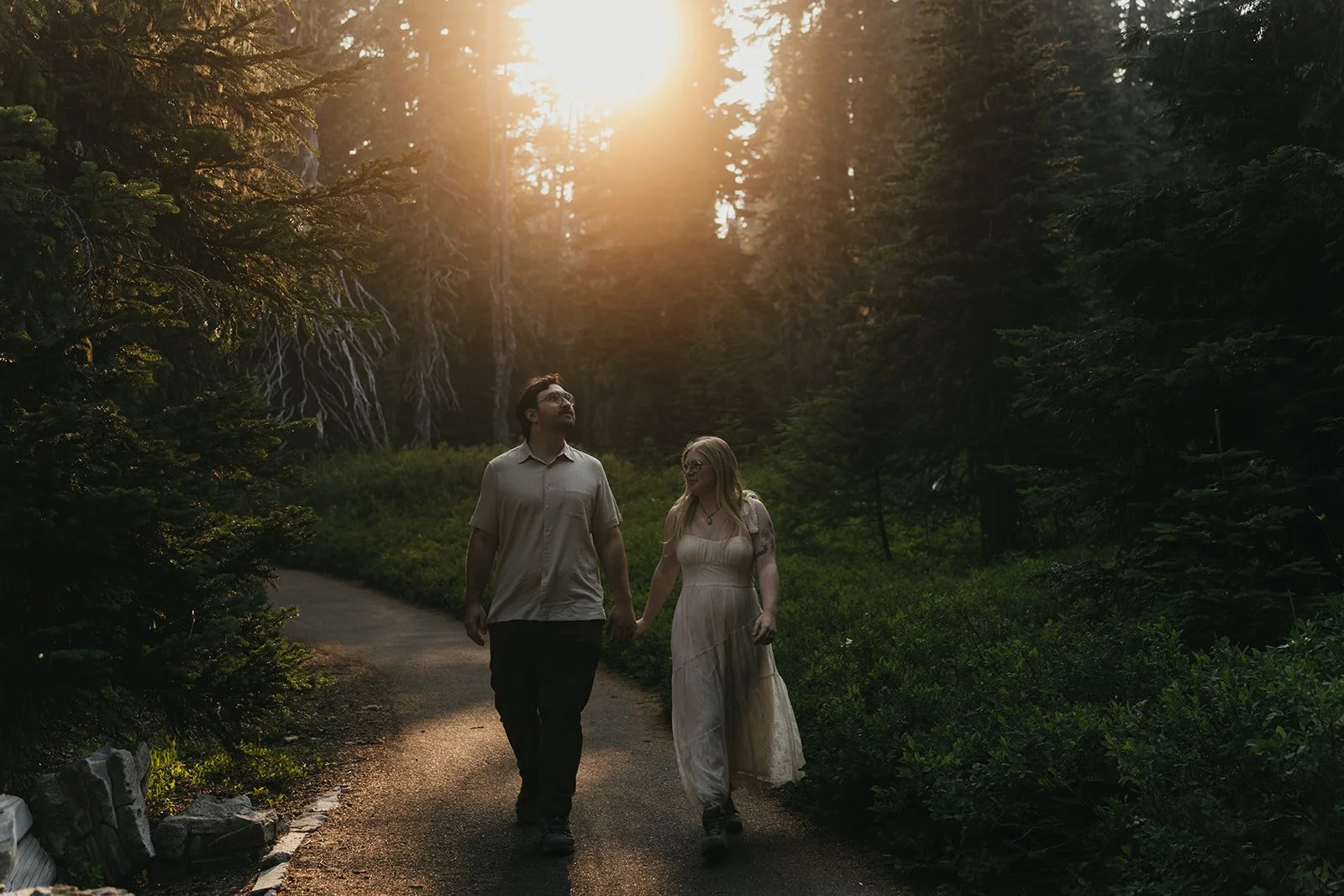
That first bit is not a test. You do not have to force a laugh or pretend you are having the best day of your life every second. Just keep moving and stay connected. Hold hands while you walk. Let your partner whisper something ridiculous. Fix each other’s collar. Take a breath. The comfort usually arrives faster than you expect once you realize there is no wrong way to be affectionate.
If you have a side you prefer, a feature you feel self-conscious about, or a physical limitation that affects how you move, share it beforehand. That information is helpful, not high-maintenance. Great photos happen when the experience is shaped around you, not when you are asked to squeeze yourselves into a standard pose.
The best prompts create real moments
Natural-looking photos are not about being left without direction. They are about prompts that invite a genuine response. Instead of being told to smile endlessly at the camera, you may be encouraged to slow dance with no music, tell your partner what you admire about them, or squeeze them until they laugh.
Some prompts will feel sweet. Some will feel a little goofy. The goofy ones often work because they break the tension. If you laugh at the prompt itself, that is still your laugh. If one of you gets shy during a quiet, close moment, that softness can be just as beautiful as a huge, joyful grin.
Try not to judge each image while the session is happening. Looking for reassurance after every click can pull you out of the moment. Trust the process, stay close, and let your photographer watch for the small things: fingers intertwined, a forehead kiss, a glance that says more than a formal pose ever could.
Make room for the photos that matter to you
Before your session, think about what you hope to feel when you look at these images later. Do you want something playful and full of movement? Romantic and quiet? A mix of both? Tell your photographer. You do not need photography vocabulary to communicate your vision. “We want it to feel like us on a really good date” is plenty helpful.
You can also mention any must-have images, such as a few looking at the camera for an announcement card or a photo that shows off a new ring. Then let the rest unfold. A session with a clear intention and a little breathing room usually feels far more personal than one spent recreating a long list of poses from the internet.
Your relationship does not have to look polished to deserve beautiful photos. Show up a little early, wear something you can move in, hold your favorite person close, and let the imperfect, funny, tender moments have their turn in front of the camera. Those are often the ones that feel most like home.