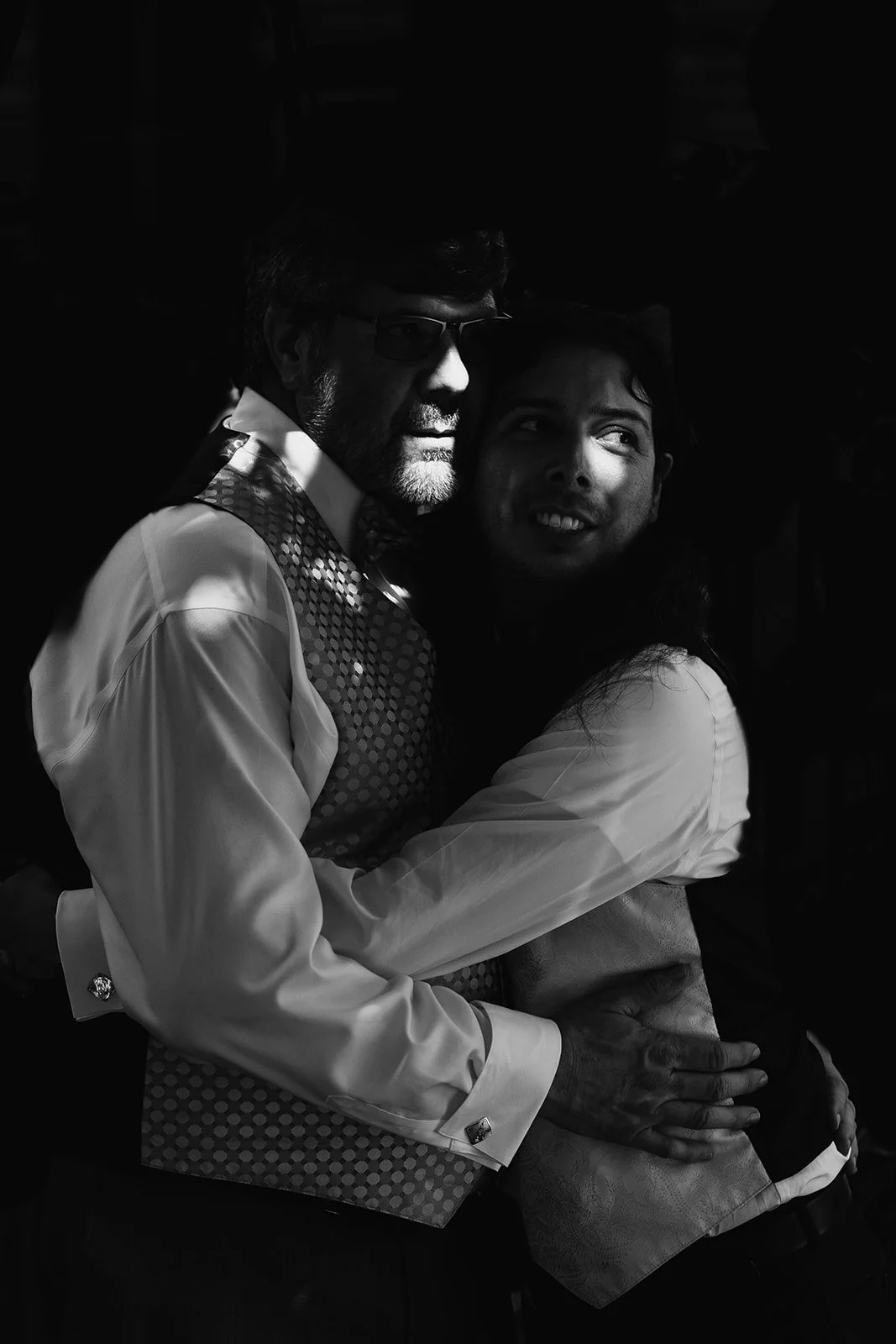
How to Look Natural in Photos
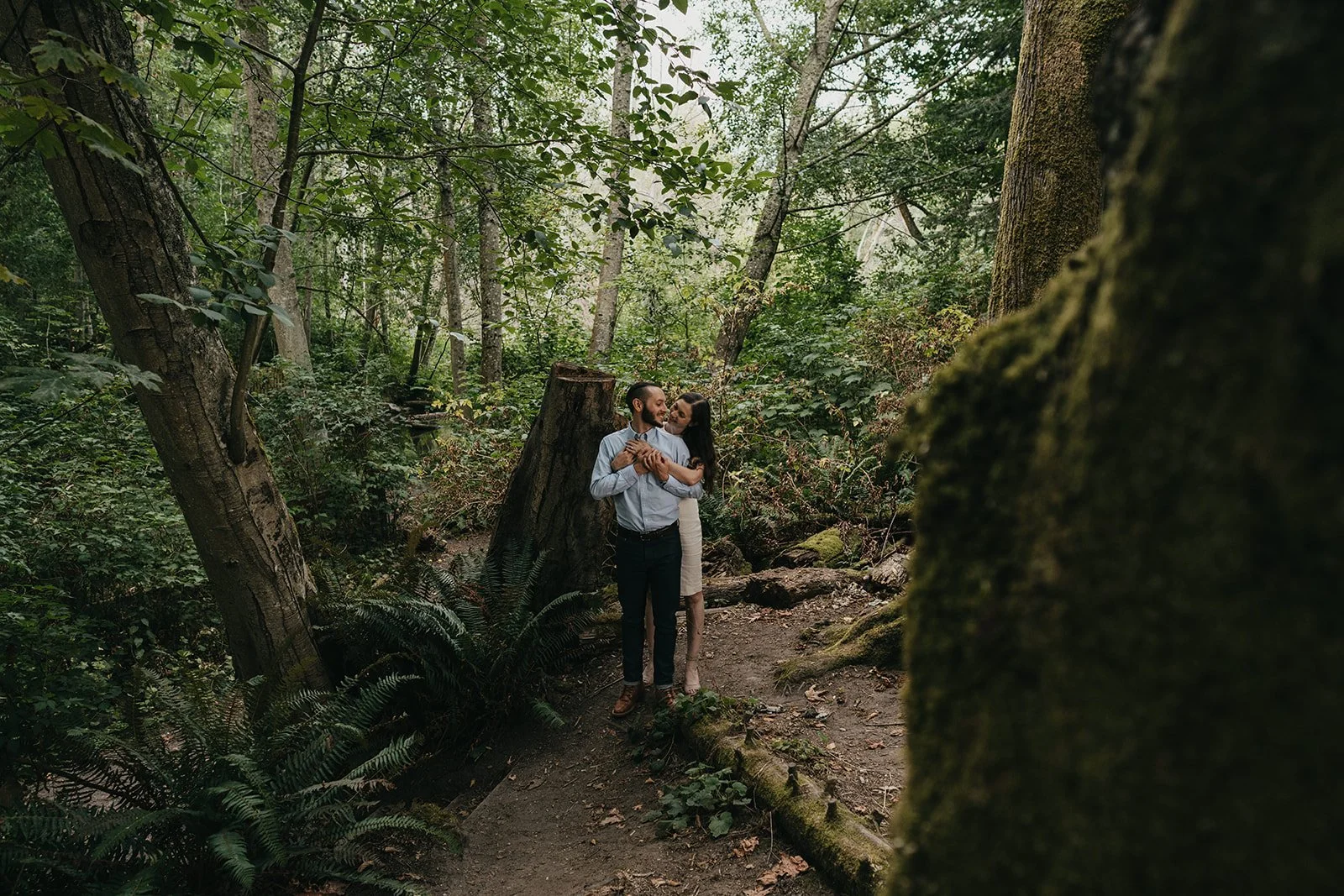
The fastest way to look awkward in a photo is to think, "I have no idea what to do with my body." If that thought has ever hit the second a camera comes out, you are deeply, wonderfully normal. A lot of couples searching for how to look natural photos are not trying to become models - they just want images that feel like them, not like they borrowed someone else’s personality for the day.
The good news is that natural-looking photos usually have very little to do with being photogenic and a whole lot to do with comfort, connection, and gentle direction. You do not need to memorize poses, practice a fake smile in the mirror, or somehow become "good at photos" overnight. You just need a few simple shifts that help your body relax and your real expressions show up.
How to look natural in photos starts before the camera comes out
Most people assume natural photos happen in the moment. Sometimes they do. But more often, they start earlier - with what you wear, how rushed you feel, and whether you trust the person taking the photo.
If you show up flustered, adjusting an outfit that never felt right, already convinced you are awkward, your body will reflect that. Shoulders get tight. Smiles get forced. Hands suddenly feel like a complicated problem.
If you want photos to feel easy, make it easy on yourself first. Wear something you can move in. Build in extra time so you are not arriving stressed. Pick a location that feels comfortable instead of one that only looks good on Pinterest. If you are taking photos with your partner, spend a few minutes actually being together before the session starts. Talk. Breathe. Hold hands. The goal is not perfection. The goal is to arrive as a real person, not a tightly wound version of one.
Stop posing and start interacting
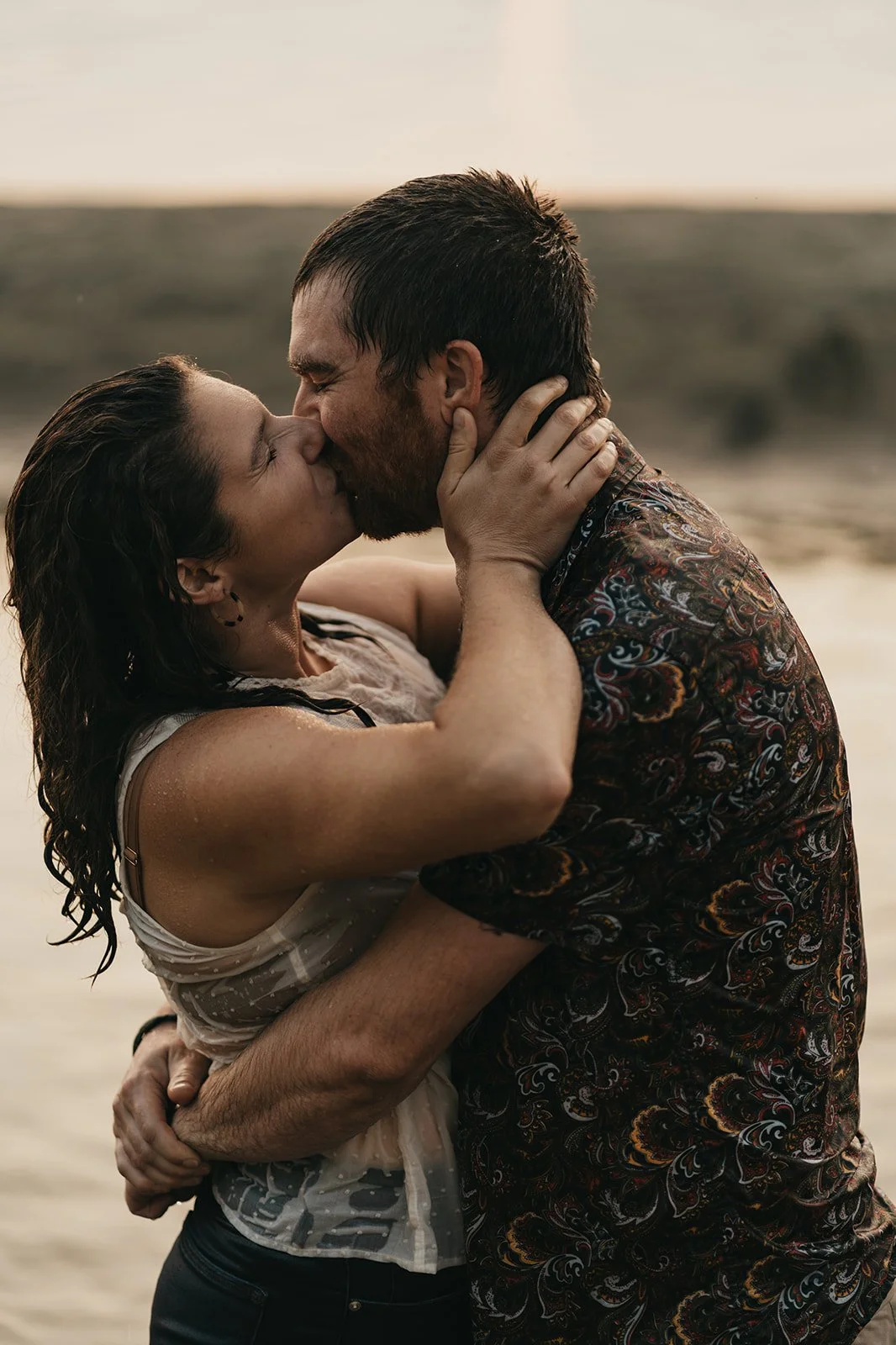
This is where people usually relax. A natural photo rarely comes from standing perfectly still and smiling directly at the camera for ten straight minutes. It comes from doing something small and real.
Walk together. Lean into each other. Whisper something ridiculous. Fix a loose strand of hair. Pull your partner in closer. Look at them instead of the lens for a few frames. Natural photos have energy in them, even when the moment is quiet.
That does not mean posing is bad. Good posing is helpful. The difference is that natural posing gives you a shape to start from, then lets real movement take over. A slight turn of the body feels softer than facing the camera straight on. A bent knee looks more relaxed than locked legs. Hands need a job, even if that job is as simple as resting on your partner’s arm or tucking into a pocket.
The sweet spot is guided, not stiff. You are not trying to freeze into a perfect shape. You are giving your body something comfortable to do.
The best expressions happen between moments
One reason candid images feel so alive is that people are not holding an expression in place. They are reacting. They are mid-laugh, mid-breath, mid-conversation.
If you have ever felt like your smile looks fake on command, try not smiling on command. Instead, think about your person. Listen to what they are saying. Move a little. Let your face respond instead of performing. A relaxed expression often looks more beautiful than a huge grin that you are trying to maintain for too long.
For couples, this matters even more. The camera does not just photograph what you look like. It photographs how you are with each other. That little glance, the way you naturally tuck into someone’s side, the laugh you only use with them - that is the good stuff.
What to do with your hands, face, and posture
Let’s be honest. Hands are where confidence goes to die.
If you never know what to do with yours, keep it simple. Touch your partner. Hold hands. Rest one hand at your waist. Lightly adjust a jacket or sleeve. Put a hand in a pocket with the thumb out if full pockets feel too stiff. The key is gentle contact, not gripping for dear life.
For your face, the biggest trick is tension. When people feel nervous, they tighten their jaw, press their lips together, and lift their chin slightly. It reads as strained, even if they are trying hard to look calm. A small exhale helps more than most people realize. Relax your mouth. Drop your shoulders. Let your jaw soften. Think less about smiling big and more about feeling at ease.
Posture matters too, but not in a formal, chest-out way. You want length without rigidity. Stand tall, then loosen a little. Leaning slightly toward your partner or toward the camera can create connection. Leaning away can make a photo feel hesitant, even if you do not mean it that way.
If you feel awkward, movement is your best friend
Stillness can be beautiful, but it is unforgiving when you are nervous. Movement gives your body somewhere to put that energy.
That can mean walking slowly, swaying, brushing shoulders, spinning once, or pulling each other in for a hug. It can be tiny. The point is not to create a performance. The point is to avoid that frozen feeling that makes people look less like themselves.
This is especially true for engagement sessions and wedding portraits. When couples are asked to "just stand there and smile," they often feel exposed. When they are invited to interact, they settle into each other. That shift is where photos start looking honest.
How to look natural photos when you hate being photographed
Some people feel mildly awkward in front of a camera. Some people feel full-body panic. If you are in the second group, you are not difficult, high-maintenance, or doomed to bad pictures.
Usually, hating photos is not really about photos. It is about feeling watched, judged, or unsure of how you will come across. That is why reassurance and pacing matter so much. A good photo experience does not throw you into the deep end. It gives you direction, lets you ease in, and creates room for your personality to show up at its own speed.
If this sounds like you, say so before your session. Seriously. You do not get bonus points for pretending to be chill. The more your photographer knows, the better they can guide you. At Jamie Buckley Photography, that comfort-first approach is a huge part of what helps couples go from "we are awkward" to "wait, that actually looks like us."
There is also a trade-off worth mentioning here. Natural photos do not always mean zero awareness of the camera. Sometimes the most authentic image still involves a little direction, a little repetition, and a few seconds of wondering where to place your elbow. That is normal. Looking natural and feeling natural are related, but they are not always identical in every second of a session.
Choose connection over perfection
A lot of people chase natural photos by trying to eliminate every flaw. They worry about their smile, their angle, their arm, their hair, their height difference, their whatever. But the photos people love most are rarely the ones that are technically perfect in every tiny way.
They are the ones that feel like something.
A forehead pressed in close. Wind moving through hair. A laugh that was never meant to be elegant. The way one of you always reaches for the other first. Those details matter because they are yours. That is what makes a photo feel lived-in instead of staged.
If you focus on connecting instead of correcting, you will almost always look more natural. Not flawless. Better.
A few quiet choices make a big difference
Light matters. So does timing. So does whether you have given yourself enough room to breathe. Golden hour helps, of course, but the bigger win is choosing a pace that does not make you feel rushed. When people are hurried, it shows.
It also helps to treat the session like an experience instead of a task. Go get coffee after. Make a date out of it. Wear something that feels like your best version of yourself, not a costume. Natural photos come easier when the day itself feels grounded and enjoyable.
And one more thing - do not judge every frame while it is happening. That is a fast path to getting stuck in your head. Let the moment be the moment. Trust the process a little.
The truth is, looking natural in photos is less about learning a secret trick and more about letting yourself be seen without trying so hard to control every detail. You do not need to become someone more polished, more poised, or more camera-ready than you already are. You just need a little support, a little movement, and enough space to be real. That is usually where the magic shows up.